
In German, adjective endings are often very confusing to learners. Today, we will look at adjectives that are used before a noun with a direct article; meaning with der, das, die, die (plural), den, dem.
1. An adjective that is used after “article + noun + verb + adjective” doesn’t have to be adjusted at the end. The ending doesn’t change.
- Der Hund ist klein.
- Das Haus ist alt.
- Die Blume ist schön.
- Die Blumen sind schön.
2. When the adjective is positioned before the noun, you have to adjust its ending. For that, it’s relevant which article is being in order to add the correct ending.
- Der kleine Hund ist süß.
- Das alte Haus ist kaputt.
- Die schöne Blume ist groß.
- Die schönen Blumen sind klein.
For the SINGULAR noun, you only add “-e” to the adjective.
When you use a PLURAL noun, you add “-en” to the adjective ending.
3. This worksheet also includes the adjective endings in accusative and dative case.
a) For the accusative case, you only need to adapt the adjective ending before a masculine noun.
You change it just the way you change the articles in accusative; add -en.
der => den Hund => Ich habe den kleinen Hund gesehen.
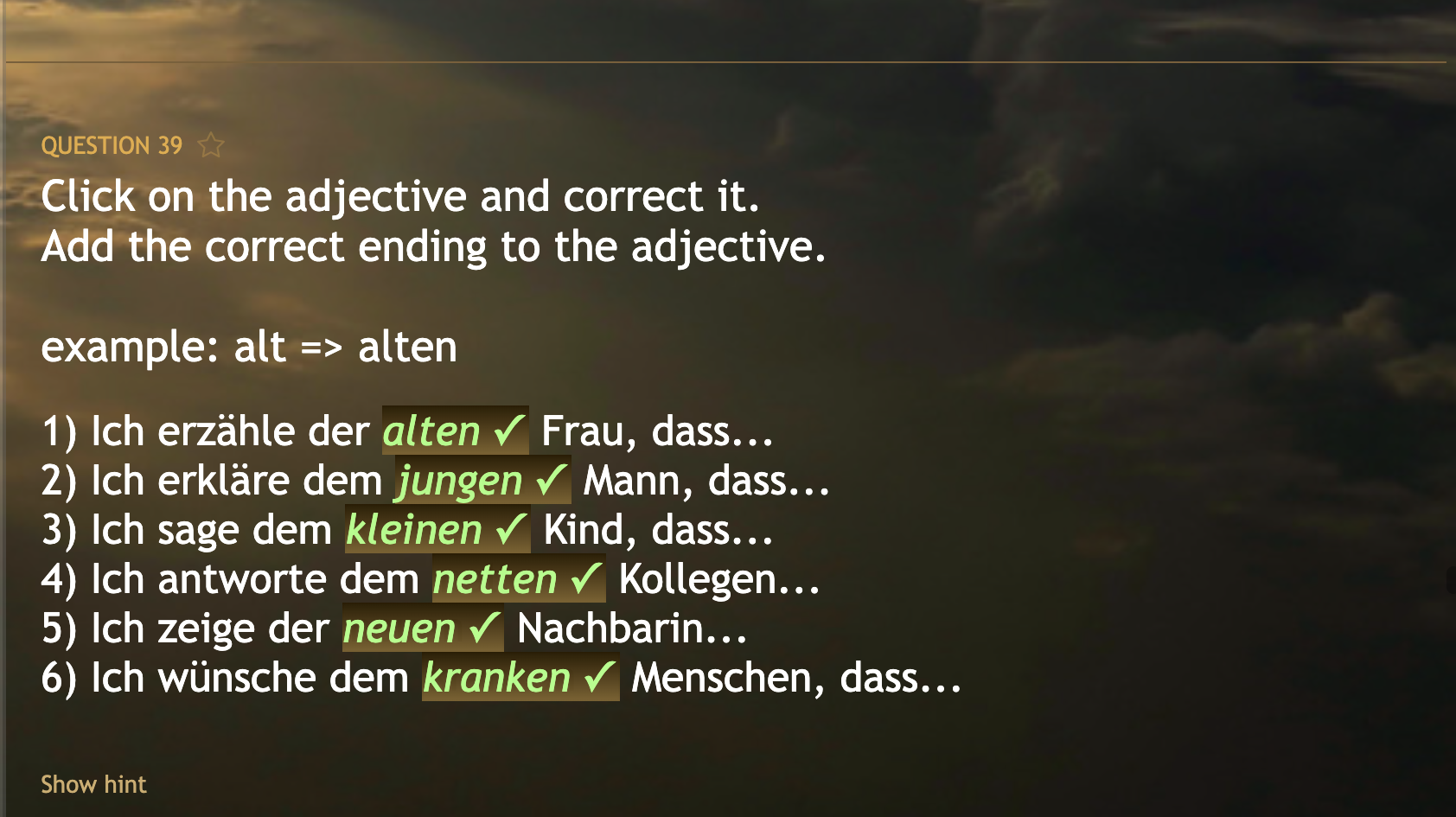
b) For the dative case, you need to change the adjectives for all nouns but at least it changes the same for all; you add -en.
- der => dem Nachbarn: Ich helfe dem netten Nachbarn.
- das => dem Kind: Ich helfe dem netten Kind.
- die => der Nachbarin: Ich helfe der netten Nachbarin.
- die => den Nachbarn (Plural): Ich helfe den netten Nachbarin.
4. To practice more adjective endings for “der, das, die, die (plural), den, dem”, click on this link below.
REMEMBER: Always read the sentences out loud and DO the recording exercises.